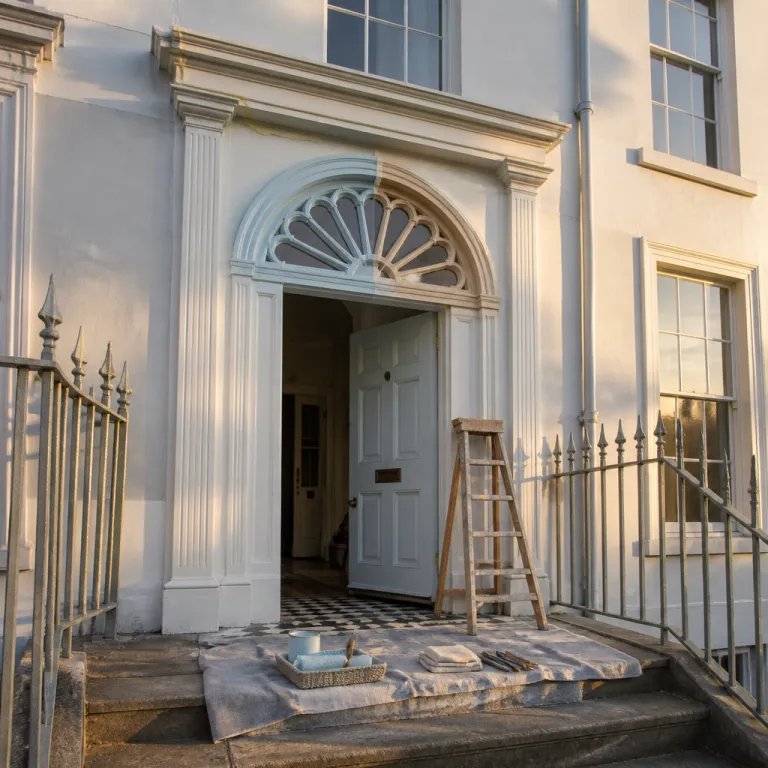
Why Georgian townhouse hotels in Ireland feel different from any other stay
Step through a Georgian fanlight door and the scale changes immediately. In the best Georgian townhouse hotels in Ireland, the first impression is always about proportion, with tall sash windows, generous ceiling heights and a calm, almost mathematical rhythm to every room. That sense of order shapes your entire stay, whether you are in Dublin for a quick city break or stretching a long weekend into something slower.
A Georgian townhouse was originally a multi-storey city house, and that townhouse DNA still defines how these hotels work in Ireland today. Corridors follow the original front-to-back room plan, so you move through a sequence of spaces rather than anonymous hotel corridors, and the transition from hall to stair to drawing room feels deliberate rather than accidental. When you book any of the Georgian townhouse hotels in Ireland, you are really booking into that sequence, from the fanlight to the staircase to the quiet back room overlooking a small town garden.
Architecturally, a true Georgian townhouse hotel will keep its plasterwork, cornices and fireplaces, even when the rooms have been upgraded with contemporary comforts. You will notice the fanlights over the doors in Dublin city, the symmetry of the façade in a provincial town, and the way the light falls into a double room at the front of the house in late afternoon. As one Dublin conservation architect likes to say, “In a genuine Georgian house, the architecture is doing half the hosting for you.” That is why the search for Georgian townhouse hotels in Ireland is less about chasing low prices and more about finding a hotel where the building itself is the main amenity.
Reading the architecture: what to look for when you book
Irish travellers searching for Georgian townhouse hotels in Ireland are usually looking for character first and facilities second. When you scroll through Dublin hotels or provincial guest house listings, pay attention to how much of the original Georgian style survives in the photos, especially in the main stair hall and principal rooms. A real Georgian townhouse will show you ceiling roses, panelled doors, deep skirting boards and that distinctive front-to-back room plan that makes the house feel both grand and domestic.
There is a crucial difference between a hotel Dublin offers in a Georgian-era shell and a fully preserved Georgian townhouse where the interior has been carefully conserved. Many properties in Dublin city have kept only the façade, then rebuilt the rooms behind in a generic contemporary style, which can still give a comfortable stay but loses the sense of time and town house history. If you care about depth of preservation, look for individually designed rooms that sit naturally within the original proportions, rather than long anonymous corridors that could belong to any hotels anywhere.
Heritage specialists often remind guests that “A Georgian townhouse is a multi-storey residence built during the Georgian era (1714–1830), characterized by symmetrical design and classical proportions.” That definition matters when you are choosing between a townhouse hotel and a standard city centre property, because it tells you what the building should feel like. For more context on how Irish hoteliers adapt historic shells, the long read on Irish hotels built inside something that used to be something else is particularly helpful for understanding what has been preserved and what has been replaced.
Dublin’s Georgian grid: from Trinity to Ballsbridge
Dublin is the natural starting point for anyone exploring Georgian townhouse hotels in Ireland, because the city still holds more than a thousand Georgian houses in various conditions. Around Merrion Square, Fitzwilliam Square and the streets that run between Trinity College and St Stephen’s Green, you will find some of the most elegant townhouse hotel options in the country. Many of these hotels are located on Dublin side streets that look quiet from the outside, yet sit within easy walking distance of the city centre theatres, galleries and restaurants.
For a stay that leans into academic Dublin, properties close to Trinity and the historic campus gates give you a strong sense of place, especially if your room faces towards the college rooftops. A number of Dublin hotels in this area operate across several joined town houses, which means a mix of room sizes, from compact bed spaces under the eaves to generous double room suites on the piano nobile. When you compare prices, remember that the most sought-after rooms are often the ones that keep their original Georgian-style plasterwork and tall windows, even if that means a slightly creaky floorboard or two.
To the south, in Ballsbridge Dublin, the atmosphere shifts from busy Dublin city bustle to embassy-quarter calm, and this is where properties such as Pembroke Townhouse have built a reputation for relaxed, residential-style stays. A Pembroke Townhouse or similar guest house in this area usually offers individually designed rooms, a quieter house feel and a short walking distance to the Aviva Stadium and the Grand Canal. One long-time owner in this district describes the appeal simply: “Guests arrive as hotel customers and leave feeling like temporary neighbours.” If you are torn between a castle stay and a city townhouse, the broader guide to castle hotels in Ireland as living history is an excellent companion piece, helping you decide whether your next night away should be under battlements or beneath a Georgian fanlight.
Beyond the capital: Georgian town houses in Ireland’s smaller cities and towns
Once you have sampled Dublin’s terraces, it is worth following the Georgian line out into Ireland’s provincial town network. Cities such as Kilkenny, Limerick and Cork, along with towns like Birr, Westport and Youghal, still have streets where a Georgian townhouse or two has quietly become a small hotel or guest house. These places rarely shout about their architecture, yet they often deliver an excellent experience for couples who want a slower, more local stay.
In a town like Birr, a restored town house near the main square might offer only a handful of rooms, but each room will usually be individually designed to reflect the building’s quirks, from angled fireplaces to deep window seats. You may find a bed breakfast style operation where the owners live in part of the house, serve you soda bread in the morning and point you towards the best pub in town for the evening. Prices outside Dublin city are often gentler, which means you can book a larger double room or even a suite in a Georgian townhouse for the same budget as a standard room in a central hotel Dublin offers.
Westport and Kilkenny are particularly helpful bases for couples who like to mix heritage with walking and food, because the Georgian streets sit within easy walking distance of river paths, parks and serious restaurants. In these smaller cities, a townhouse hotel will often be located just off the main street, giving you quick access to everything while keeping the house itself relatively quiet at night. For Irish travellers who already know the capital well, this is where Georgian townhouse hotels in Ireland really start to feel like a new category of weekend away rather than a simple alternative to chain hotels.
Modern comfort in old walls: what to expect from rooms, beds and access
Staying in a protected Georgian townhouse means accepting that the building sets some rules, and that is part of the charm. Rooms in these hotels tend to be taller rather than wider, with big windows, generous beds and sometimes slightly eccentric bathroom layouts where modern plumbing has been threaded carefully through old walls. When you compare Georgian townhouse hotels in Ireland, check the room descriptions closely, because no two rooms in a genuine townhouse hotel will be exactly the same.
Access is a practical point that Irish couples often overlook when booking a romantic stay in Dublin or any other city. Many Georgian houses were built long before lifts, so upper floor rooms may only be reachable via a staircase, which can be an issue if you have mobility concerns or heavy luggage for a longer stay. Some hotels have installed discreet lifts at the rear of the house, but where the structure is tightly protected, you may find that a ground floor or first floor room is the most helpful choice.
Noise and parking are the other two realities of city centre Georgian living, especially in Dublin city terraces near Temple Bar or busy office districts. Terrace houses share walls, so a well-run hotel will have invested in insulation, yet you should still expect a little street life filtering through, which many guests see as part of the urban experience. On parking, some properties offer small courtyards behind the house, while others rely on on-street options, so if you are driving across Ireland for a weekend, it is worth checking the hotel’s guidance before you arrive.
How to choose the right Georgian townhouse hotel for your Irish getaway
For Irish-based travellers, the real question is not whether to stay in a Georgian townhouse, but which kind of house suits your style. If you want a more polished, hotel-like experience with a staffed reception and a wide choice of rooms, then a larger townhouse hotel in Dublin or Cork might be the right fit. Couples who prefer a softer, more domestic atmosphere often gravitate towards smaller guest house properties, where the owner might greet you at the door and breakfast feels like a relaxed gathering rather than a buffet line.
Look carefully at how each property describes its rooms, because phrases like “individually designed” and “original Georgian style features” usually signal a deeper commitment to preservation. A place such as Trinity Townhouse in central Dublin, for example, trades on its proximity to Trinity College and its series of linked town houses, each room shaped by the original layout of the house rather than a standardised hotel template. Pembroke Townhouse in Ballsbridge Dublin, by contrast, leans into a more residential feel, with a mix of contemporary style touches and classic details that make the house feel lived in rather than staged.
For a broader sense of how Irish hospitality is rethinking historic properties, the piece on how a new guesthouse in Laois changes the conversation is particularly insightful. It shows how the line between bed breakfast, guest house and small hotel is blurring, especially in heritage buildings where the house itself dictates the rhythm of service. When you next search for Georgian townhouse hotels in Ireland, use that lens, and you will quickly see which hotels are simply located in old buildings and which ones are genuinely shaped by the Georgian town house tradition.
Key figures and heritage context for Ireland’s Georgian townhouses
- Dublin City Council’s Record of Protected Structures lists just over a thousand Georgian townhouses in Dublin, which means the capital still holds one of the largest coherent Georgian cityscapes in Europe. Exact counts vary slightly between surveys, but the order of magnitude is consistent across official planning documents.
- Heritage bodies such as the Irish Georgian Society and the Irish Heritage Trust note that a significant minority of Georgian buildings have been converted into hotels or guest accommodation. While the often-quoted figure of around 15 percent is an estimate rather than a formal census, it reflects the visible concentration of guest houses and boutique hotels in historic terraces.
- The first major wave of Georgian townhouse construction in Ireland began in the 1760s, and many of the houses now operating as Dublin hotels or regional guest houses date from that period.
- Heritage organisations and local governments increasingly use adaptive reuse, turning a former private town house into a hotel or bed breakfast, as a way to fund long-term conservation.
- For Irish travellers, this means that every stay in a Georgian townhouse hotel directly supports the preservation of plasterwork, staircases and façades that might otherwise be lost.
Frequently asked questions about Georgian townhouse hotels in Ireland
What exactly is a Georgian townhouse, and why does it matter for my stay ?
A Georgian townhouse in Ireland is a multi-storey city house built between the early eighteenth and early nineteenth centuries, defined by symmetry, classical proportions and a clear front-to-back room plan. When such a house becomes a hotel, those proportions shape your room, the staircase you climb and even how light enters the space. Choosing Georgian townhouse hotels in Ireland means choosing that architectural character over a more generic modern layout.
Are Georgian townhouse hotels in Dublin more expensive than other options ?
In central Dublin city, well-preserved Georgian properties often sit at a premium compared with standard modern hotels, especially for larger rooms on the main floors. However, prices vary widely depending on location, with areas like Ballsbridge Dublin sometimes offering better value than streets right beside Trinity College or Temple Bar. Outside the capital, in towns like Kilkenny or Westport, you can often secure an excellent double room in a Georgian townhouse for the same rate as a mid-range hotel Dublin would charge for a smaller space.
How accessible are Georgian townhouse hotels for guests with mobility needs ?
Because many Georgian houses are protected structures, installing lifts can be complex, so some hotels still rely on stair access to upper rooms. If you have mobility concerns, it is helpful to contact the hotel directly and request a ground floor or first floor room, or ask whether any discreet lift has been added at the rear of the house. Irish hoteliers running Georgian townhouse hotels in Ireland are increasingly aware of accessibility needs, but the age and layout of each house still set some limits.
What is the difference between a Georgian style hotel and a real Georgian townhouse hotel ?
A Georgian style hotel might be a modern building decorated with period-inspired furniture and colours, while a true Georgian townhouse hotel occupies an original eighteenth or early nineteenth century house. In the latter, you will usually see original staircases, plasterwork and room proportions, even if the bathrooms and beds are fully modern. When you care about authenticity, look for references to preserved features and individually designed rooms rather than just Georgian style décor.
Why have so many Georgian townhouses in Ireland become hotels or guest houses ?
Maintaining a large Georgian townhouse as a private house is expensive, so adaptive reuse as a hotel, guest house or bed breakfast has become a practical way to fund conservation. Heritage organisations and local governments often support these conversions because they keep façades, roofs and interiors in active use while drawing visitors into historic parts of the city. For Irish travellers, staying in Georgian townhouse hotels in Ireland is a direct way to support that preservation while enjoying a stay rooted in the architectural history of the island.