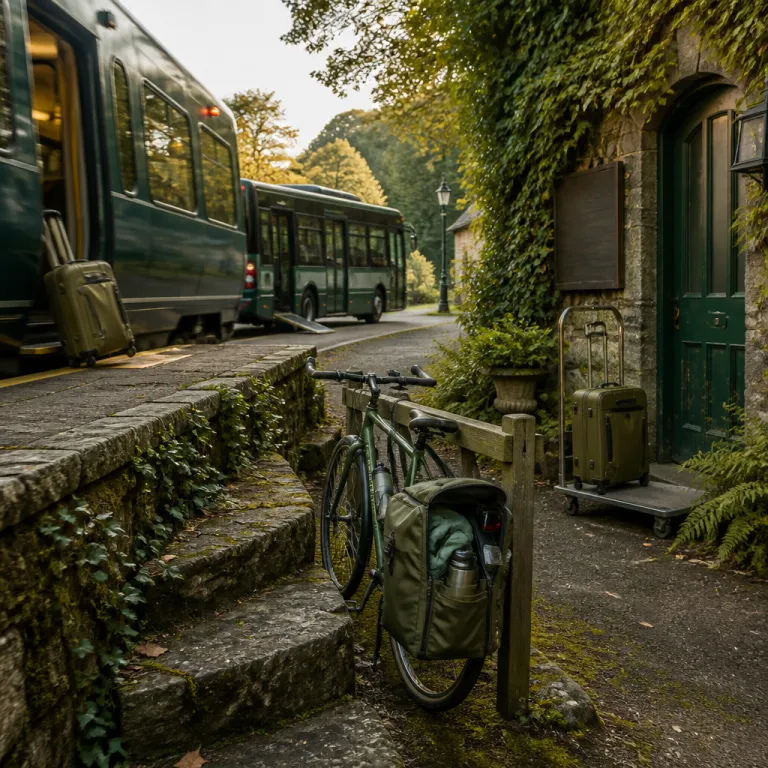
Why car free hotels in Ireland work better with public transport
Slow travel in Ireland rewards the traveller who leaves the car keys at home. When you plan a stay around car free hotels in Ireland using public transport, the journey becomes part of the experience rather than a stressful dash between meetings and check in. You step off a train or bus into a city or village already tuned to local pace, not to the parking meter.
Across Ireland, public services for transport have quietly improved, with Irish Rail and Bus Éireann now linking most major hubs to smaller towns where the best countryside hotel stays hide in plain sight. Irish Rail connects Dublin to Galway, Westport, Killarney, Cork and Wexford with intercity train services that suit a Friday evening business escape or a Monday morning return trip. Bus Éireann, CityLink and GoBus fill the gaps, so a car free itinerary can move from city to coast in a single day without the cost of an Ireland car hire. Current network maps and timetables are available directly from Irish Rail and Bus Éireann.
For Irish residents, the economics of free travel and reduced fares make this shift even more persuasive. The national Free Travel Scheme, including the Senior SmartPass for eligible residents of both Ireland and Northern Ireland, turns public transport into a genuine lifestyle choice rather than a last resort. As recent reports from Fáilte Ireland indicate, a substantial share of visitors already use buses and trains during their stay, and that figure is rising as more travellers realise they can travel free or cheaply while still checking into a luxury hotel with a river view and a serious wine list. Always confirm the latest statistics and scheme details on official tourism and government sites before you book.
Rail routes where the window is your first countryside view
The most convincing argument for car free hotels in Ireland using public transport is the view from the train window. The Dublin to Westport line is frequently cited as one of Ireland’s most scenic routes, and it earns that reputation as the carriage glides past midlands farmland before opening towards Clew Bay and the first Atlantic light of your trip. Arriving this way, you step into Westport town already slowed, ready for a hotel check in that feels like a continuation of the journey rather than its end.
From Dublin to Galway, the train services take around two hours and twenty minutes, which is often faster than driving an Ireland car when you factor in city traffic and parking. Stay in a hotel within walking distance of Eyre Square, such as The Hardiman or the Park House Hotel, and you can be on a late afternoon bus to the Cliffs of Moher the next day, joining a small group day tour that returns in time for dinner in the Latin Quarter. A typical pattern might be a 09:25 departure from Dublin Heuston, an arrival in Galway around 11:45, and a check in window that leaves you free for a first stroll before an early night. This kind of public transport rhythm suits the business leisure traveller who wants one focused work day in the city followed by a second day of coastal air without touching a steering wheel.
The Dublin to Killarney and Dublin to Cork routes are equally strong foundations for a car free itinerary built around country house stays. Killarney station sits close to several premium hotels that offer luggage storage and guided tour options inside Killarney National Park, including The Great Southern Killarney and The Killarney Park, so you can travel free of bags on a bicycle or jaunting car while the concierge handles logistics. In Cork city, riverside hotels near Kent station, such as The Montenotte Hotel or The River Lee, pair well with a services card for local public transport, letting you move between galleries, restaurants and harbour walks without ever worrying about where to leave a car. Up to date journey times and sample fares are published on the Irish Rail website.
For multi generational trips, these rail linked stays often work better than remote properties that assume two drivers and a large vehicle. Families can spread across a carriage, use a Leap card or similar services card for onward public services in the city, and arrive at a country house where grandparents, parents and children all have different day tour options. For more ideas on extended family stays that work without a car, our guide to Ireland’s country houses for three generation holidays highlights properties that understand slow arrivals and flexible departures.
Greenways, bicycles and hotels that meet you at the trail
If the train is the spine of car free hotels in Ireland using public transport, the greenways are the limbs that reach into quieter countryside. The Great Western Greenway runs for roughly forty two kilometres from Westport towards Achill, and several hotels in Westport, Newport and Mulranny now work with local operators to offer bicycle hire, luggage transfer and shuttle bus services from trailheads. Westport Plaza Hotel, Knockranny House Hotel and Mulranny Park Hotel are among the properties that can help arrange bike rental and bag transfers, so you can arrive by train, cycle a section each day, and return to the same hotel or move between properties without ever touching an Ireland car. Route maps and distance details are maintained by Mayo County Council and linked from official tourism portals.
On the opposite coast, the Waterford Greenway stretches for about forty six kilometres along a former railway line, and luxury hotels in Waterford city and Dungarvan have started to build packages around it. Many, including The Granville Hotel in Waterford and The Park Hotel Dungarvan, will point you towards an application form for local bike rental, advise on public transport links back to your starting point, and provide secure storage so you can travel free of worry about your equipment. For the business traveller extending a Cork or Dublin work trip, a two day detour to Waterford by train and bus, with a single overnight hotel stay and a full day on the greenway, can feel like a complete reset. The National Transport Authority and local authority websites publish the most current information on greenway access and public connections.
Golfers are also waking up to the benefits of a car free approach when courses sit near rail lines or reliable bus routes. Some of Ireland’s best golf hotels, highlighted in our feature on golf hotels where the nineteenth hole outshines the first eighteen, now coordinate tee times with train arrivals and offer transfers that count as public services rather than private car hires. You arrive on a morning train, play eighteen holes, enjoy the bar and spa, then take a late bus or next day train back to the city without ever being unfit to drive because you never had to drive at all.
For cyclists, Irish Rail allows bicycles on many services outside peak times, though you should always check the specific train services before you travel. The official guidance from Irish Rail confirms that bikes are permitted on numerous intercity and regional routes, with some restrictions during commuter peaks and on certain train types. Hotels that understand this will often time check in flexibility around train timetables, letting you roll straight from the platform to a hot shower and a late lunch.
Bus networks, coastal towns and hotels that work without a car
The bus network is the unsung hero of car free hotels in Ireland using public transport, especially for reaching coastal towns and inland valleys that sit beyond the rail map. Bus Éireann, CityLink and GoBus operate frequent services from Dublin, Galway and Cork to smaller centres where the best inns and country houses quietly thrive. For the Irish traveller, this means a Friday evening departure from the city and a late night check in without the fatigue of a long drive.
Galway city is a particularly strong base for bus led itineraries, with day tour operators running regular services to the Cliffs of Moher, Connemara and the Aran Islands ferry ports. You can stay in a central hotel, walk to the bus stop in the morning, and be standing above the Atlantic by late morning on a curated day tour that returns in time for a second sitting at dinner. This pattern of public movement suits the executive who wants to keep the phone off for a full day, knowing that someone else is handling the driving, parking and timing.
In the south west, Killarney and the wider Ring of Kerry are well served by both train and bus, which makes a car free stay entirely realistic. Many hotels, including The Lake Hotel and Muckross Park Hotel & Spa, offer their own shuttle services to key trailheads and viewpoints, effectively extending public transport into the national park for guests who prefer to travel free of driving responsibilities. When you combine this with the national Free Travel Scheme for eligible residents, including those who are medically certified as unfit to drive, the region becomes one of the most inclusive destinations in Ireland.
For spontaneous escapes, our guide to considered last minute hotel escapes in Ireland highlights properties that sit close to major bus corridors. These hotels understand that a services card, a reliable timetable and a late check out can be as valuable as a spa treatment for the business leisure guest. When public services run on time and the hotel aligns its breakfast and check out windows with bus and train departures, the whole trip feels choreographed rather than improvised.
Free travel schemes, social welfare supports and inclusive luxury
One of the quiet strengths of car free hotels in Ireland using public transport is how well they align with national social welfare and mobility policies. The Irish Free Travel Scheme allows many residents, including some carers and companions, to travel free on most public transport, which can transform the affordability of a countryside hotel stay. For a bereaved partner or older traveller adjusting to solo trips, the ability to use a Senior SmartPass or equivalent card removes both cost and confidence barriers.
Eligibility for these schemes often depends on age, disability status or being medically certified as unfit to drive, and the application form process can feel bureaucratic at first glance. Yet once approved, the services card or pass turns the entire island into a network of reachable destinations, from Dublin city hotels near Heuston and Connolly stations to small properties in the Boyne Valley reachable by a combination of train and bus. When hotels understand this landscape, they can design packages that explicitly welcome guests travelling on public transport, including clear directions, pick up options and flexible check in times. The Department of Social Protection and Translink publish the most current eligibility rules and application details.
There is also a social dimension that matters for Irish travellers who share costs and responsibilities with a partner cohabitant or extended family. A couple might choose to spend on a higher category hotel room or spa treatment because they have saved on Ireland car hire, fuel and parking, especially on a two or three day trip. For multi generational groups, the ability for grandparents to travel public on their own free travel pass while younger relatives use standard fares can make a countryside reunion both more inclusive and more sustainable.
Hotels that lean into this inclusive approach often seek independent eco credentials such as Fáilte Ireland’s Green Hospitality certification. These properties tend to promote public transport access on their websites, offer information on local bus and train services at reception, and sometimes provide small incentives for guests who arrive car free. For the business leisure traveller, choosing such a hotel is a way to align personal values on sustainability with practical comfort and service standards.
Designing a car free countryside escape from Dublin, Cork or Galway
Planning a car free hotel stay in Ireland using public transport starts with choosing the right hub city. Dublin, Cork and Galway each offer strong rail and bus connections, so your first night can double as a work base and a soft landing before you head into the countryside. From there, the key is to think in legs : train or bus to a regional town, then local public services, hotel transfers or bicycles for the final stretch.
From Dublin, a classic two night itinerary might pair a city centre hotel near Connolly station with a second night in the Boyne Valley. You could take a morning train to Drogheda, connect with a local bus towards Slane or Navan, and check into a country house where the afternoon is reserved for riverside walks and a long dinner. The next day, a pre arranged taxi or hotel shuttle returns you to the station in time for a late afternoon train, keeping the whole trip car free while still feeling indulgent. Irish Rail’s online journey planner allows you to test different departure times and see live connection options.
Cork works well for south coast escapes, with trains and buses linking the city to Cobh, Kinsale and West Cork towns where small hotels and guesthouses sit within walking distance of the harbour. A business traveller might spend one day in Cork city meetings, then take a short bus ride to Kinsale for a single night of sea air, good food and a harbour view room before returning by bus and train the following day. Galway, by contrast, is the ideal base for west coast adventures, with day tour operators offering bus based trips to the Cliffs of Moher, Connemara and the Aran Islands that slot neatly around hotel breakfast and dinner times. Many operators publish sample itineraries and departure schedules that you can cross check against national bus and rail timetables.
When designing these itineraries, pay attention to luggage limits on trains and buses, and consider sending a small bag ahead to the hotel if you plan to cycle or walk part of the route. Many properties now partner with local services to move bags between towns, allowing you to travel free of heavy cases on greenways or coastal paths. The reward is a style of Irish travel where the first hour in your hotel room feels like a continuation of the journey rather than a recovery from the drive.
Practical logistics for stress free, car free hotel stays
Executing car free hotels in Ireland using public transport at a premium level requires attention to detail, but the tools now exist to make it smooth. Online booking platforms and travel apps integrate real time data from Irish Rail and Bus Éireann, so you can align train services, bus departures and hotel check in windows with confidence. For the business leisure traveller, this means you can finish a meeting, walk to a station and still arrive at your countryside hotel in time for dinner without guesswork.
When booking, always check whether your chosen hotel offers luggage storage before check in and after check out, as this can unlock extra hours of exploration on arrival and departure days. Some properties will even hold bags for guests heading off on a one day tour by bus or bicycle, letting you travel free of weight while still returning to the same room that evening. If you plan to use a Free Travel Pass, Senior SmartPass or other services card linked to the national travel scheme, confirm which operators accept it on your intended routes, especially if your trip crosses into Northern Ireland. Operator websites and the National Transport Authority’s information pages are the most reliable sources for this.
For those who are medically certified as unfit to drive, or who simply prefer not to manage an Ireland car on narrow rural roads, this level of planning can be the difference between staying home and booking a meaningful trip. Public services now reach many of the towns that once felt accessible only by car, and hotels are learning to publish clear, step by step directions for guests arriving by train, bus or bicycle. The result is a style of Irish hospitality where the absence of a car is not a compromise but a quiet luxury, allowing you to focus on the landscape, the room and the table rather than the road.
Key figures for car free travel and hotels in Ireland
- Recent Fáilte Ireland research indicates that a significant proportion of tourists in Ireland already use public transport for part of their trip, which underpins the viability of car free hotel itineraries. Check the latest tourism reports on the Fáilte Ireland website for updated figures before planning a detailed route.
- Ireland now offers in the region of 1 000 km of dedicated cycling routes, according to summaries published by the National Transport Authority, giving hotels ample opportunity to link stays with greenways and traffic free paths. Exact kilometre totals change as new routes open, so verify current maps and distances on official transport portals.
- The Dublin to Galway rail journey typically takes roughly 2 hours and 20 minutes, which is often faster than driving when city congestion and parking are considered, making rail a time efficient choice for weekend breaks. Up to date timetables and journey times are always available directly from Irish Rail’s online timetable.
- The Great Western Greenway covers about 42 km between Westport and Achill, while the Waterford Greenway runs for around 46 km, both long enough to structure two or three day hotel based cycling escapes. Local tourism offices, Mayo County Council and Waterford City & County Council provide the most current route descriptions and access points.
- Irish Rail connects Dublin directly to Galway, Westport, Killarney and Cork, with typical journey times between 2 hours 20 minutes and 3 hours 30 minutes, which aligns well with check in windows at most luxury and premium hotels. Always confirm exact departure and arrival times close to your travel date using the official journey planner.
FAQ about car free hotels and public transport in Ireland
Is it easy to travel around Ireland without a car?
Yes, with extensive train and bus networks, and growing cycling routes. For many popular destinations, especially those near rail lines or major bus corridors, it is now straightforward to plan a hotel stay that relies entirely on public transport and walking.
Are there guided car free tours available in Ireland?
Yes, several operators offer guided tours using public transport and bicycles. In hubs like Dublin, Galway and Killarney, you will find day tour companies that coordinate their departures with train and bus arrivals, making it simple to add excursions to a car free hotel stay.
Can I bring my bicycle on trains in Ireland?
Yes, but there may be restrictions during peak times; check with the operator. Irish Rail allows bikes on many services, especially off peak and on intercity routes, so it is wise to reserve a space where possible and to plan hotel check in times around the train you choose.
Do Irish free travel passes work on all public transport?
Most national free travel passes and the Senior SmartPass are valid on Irish Rail, Bus Éireann and many other operators, but coverage is not universal. Before booking a hotel, check which services accept your pass on the routes you need, particularly if your itinerary includes cross border travel to or from Northern Ireland.
How should I choose a hotel when travelling without a car?
Prioritise hotels within walking distance of train stations or main bus stops, and look for properties that publish clear public transport directions on their websites. It also helps to choose hotels that offer luggage storage, flexible check in and, where possible, transfers or bike hire, so your stay remains smooth even without a car.