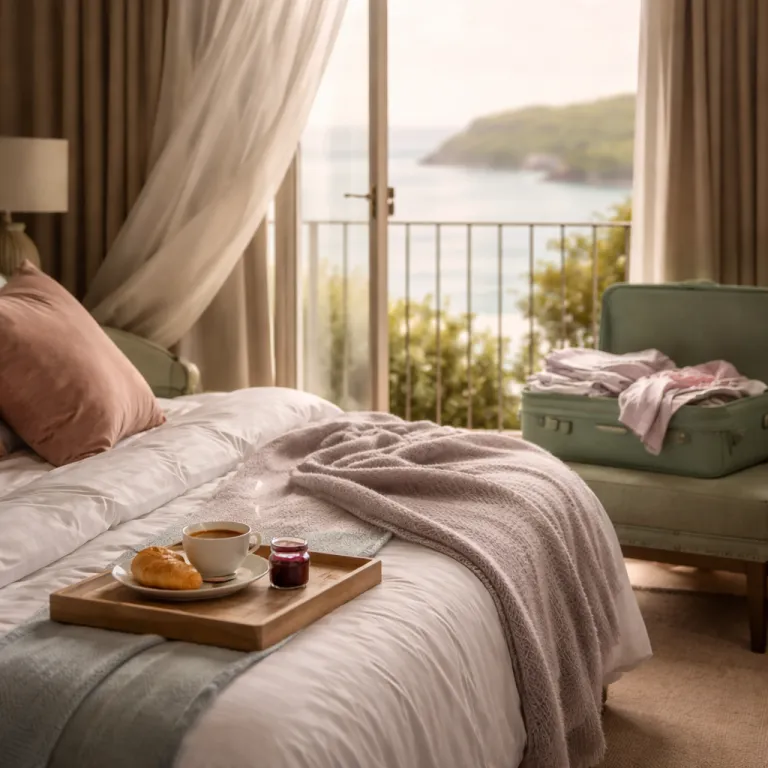
How Irish staycation luxury hotels became a first choice, not a fallback
Irish travellers did not simply return to local breaks for a season. They rewired how they think about luxury, deciding that the right hotel in Ireland can rival any long haul escape. Now the most interesting Irish staycation luxury hotels are competing directly with Paris, Lisbon and New York in the minds of business leisure guests.
That shift is most visible in how quickly people now book a hotel in Ireland for a long weekend instead of defaulting to an airport queue. A senior executive in Dublin can finish meetings on a Thursday, drive two hours and check into a castle or manor house where the spa, the suite and the service standards feel genuinely world class. Remote work has made it normal to stay on until Monday, answering emails from a quiet room overlooking a river or a walled garden.
Irish hoteliers have responded with intent, and the best hotels in Ireland now build packages specifically for domestic business leisure travellers. Many luxury hotels offer late checkout on Mondays, high speed Wi Fi in suites and rooms designed so a laptop can sit beside a martini without either feeling out of place. When you browse hotels Ireland online, you will notice more midweek offers, gift vouchers tailored to workcation stays and clear language about extending a stay after a conference or client dinner.
The data backs up what you already sense when you try to book a room for a bank holiday stay. According to Fáilte Ireland’s accommodation statistics, there are now just over 30 five star hotels in Ireland, a number that would have felt ambitious when most Irish people still treated the castle stay as a once in a lifetime bucket list event. Fáilte Ireland’s published hotel stock data for 2023, accessed in March 2024, confirms that five star properties account for a small but growing share of national room capacity. Today, a hotel Ireland break is part of an annual rhythm, with one or two serious luxury hotels and perhaps a simpler lodge or coastal guesthouse threaded through the calendar.
Attitudes have matured as quickly as the product. Irish guests now compare the best luxury hotels in Dublin and the regions against places they know in London or Milan, and they are unafraid to say when a room misses the mark. As one general manager in county Kerry put it in a recent industry panel hosted in late 2023, “our domestic guests are every bit as exacting as international visitors, and that is what keeps standards moving.” That pressure has lifted quality in everything from spa design to fine dining, and it has made the conversation about Irish staycation luxury hotels far more interesting than a simple list of castles and country houses.
For the business traveller extending a trip, this new landscape means choice and more deliberate booking behaviour. You can stay in a central Dublin hotel for two extra nights, then travel on to a manor house in county Clare or county Kerry without feeling you are compromising on luxury or service. Industry commentary from Fáilte Ireland and Tourism Ireland in 2023 notes that peak season occupancy at the upper end of the market frequently exceeds 80%, with lead times stretching to several weeks for popular weekends. The result is a domestic circuit of hotels, lodges and castles that feels coherent, confident and distinctly Irish.
Historic castles and manor houses: where Irish business leisure travellers actually stay
When Irish travellers talk about high end staycations, they often mean one thing. They mean the moment you turn off a narrow county road, pass under old trees and see a castle or manor house appear at the end of a gravel drive. For the executive extending a business trip, these historic properties offer both theatre and privacy.
Ashford Castle in county Mayo remains the archetype, and it deserves its place on any Irish bucket list of castle stays. The hotel sits on Lough Corrib, with rooms that range from compact spaces in the old lodge wings to expansive suites with lake views and deep armchairs. Many Irish guests now book two or three nights rather than a single blowout stay, using the spa, the cinema and the grounds as much as the formal fine dining room.
On the Shannon side of the country, Adare Manor has become a kind of shorthand for the new era of hotels Ireland. The neo Gothic manor house in county Limerick has been restored with a level of detail that feels almost obsessive, from the stonework to the golf course and the Michelin star restaurant. Business travellers often stay here after meetings in Limerick or Cork, using the estate as a base to explore nearby villages before returning to a room where the curtains close at the touch of a tablet.
Dromoland Castle in county Clare plays a slightly different role in the ecosystem of Irish staycation luxury hotels. Its location near Shannon Airport makes it a natural bridge between international travel and domestic stays, and many Irish executives now choose to stay there after a late flight rather than push on to Dublin. The castle hotel offers classic rooms in the main building, quieter suites in the wings and a spa that works well for a short, sharp reset between work and family life.
Historic properties are not limited to the west. In Tipperary, Cashel Palace Hotel has turned an eighteenth century manor house into a serious luxury hotel, with a spa wing that feels contemporary without losing the sense of history. Irish guests often combine a stay here with a visit to the Rock of Cashel, turning a familiar school tour site into a more grown up weekend that still feels rooted in place. For a deeper dive into how a religious estate can become a refined retreat, the story of a reimagined Franciscan property is explored in detail in this feature on a Franciscan manor reimagined for Irish travellers seeking refined stays.
These castle and manor house hotels are not just for anniversaries and weddings any more. Irish business travellers now treat them as practical bases, using quiet rooms for video calls in the morning and the grounds for long walks in the afternoon. When you book a hotel in this category, look for details such as flexible breakfast times, strong coffee service to the room and a spa that opens early enough to fit around your working day.
The best luxury properties in this historic bracket understand that Irish guests value character as much as polish. A slightly creaky corridor in a castle, a library with mismatched chairs in a manor house or a lodge tucked away near the old walled garden can feel more luxurious than a generic international suite. That is where Irish staycation luxury hotels have an edge over many overseas options, and why the domestic market has become so compelling for those who travel often for work.
From Wild Atlantic drama to city polish: regional gaps and rising stars
Not every region has moved at the same pace, and that matters when you are planning where to stay. The Wild Atlantic coastline has seen the most dramatic shift, with counties like Kerry and Clare now offering a serious spread of Irish staycation luxury hotels. Yet there are still stretches where the scenery is world class but the hotel product feels a decade behind.
County Kerry remains the most complete package for Irish travellers who want both landscape and luxury. Around Killarney and Kenmare, you can move between a castle, a manor house and a more contemporary lodge without ever feeling you have stepped down in quality. If you are weighing up castle hotels in Killarney for a family escape or a solo reset, this detailed guide to experience castle hotels in Killarney with luxury stays and historic charm is a useful starting point.
Sheen Falls Lodge near Kenmare is a good example of how a property can feel both rooted and modern. The hotel sits where the river meets the bay, with rooms and suites that look onto the water and the surrounding hills. Irish guests often talk about the sound of the falls at night, the way the spa feels like a natural extension of the landscape and the pleasure of fine dining that leans into local produce rather than chasing trends.
When people mention Sheen Falls or the falls lodge in conversation, they are usually talking about more than a single stay. For many, it has become a benchmark against which other hotels Ireland are measured, especially in terms of how well a property integrates the outdoors into the stay. If you are building a personal bucket list of Irish staycation luxury hotels, a few nights here will tell you a lot about what you now expect from a hotel in Ireland.
County Clare has caught up quickly, anchored by Dromoland Castle and a growing cluster of smaller luxury hotels and lodges along the Wild Atlantic coast. Irish travellers who once drove straight through to Kerry now break the journey, staying a night or two near Lahinch or the Burren before continuing south. The region still has gaps, particularly in the very top tier of hotel Ireland options, but the trajectory is clear and encouraging.
Dublin plays a different role in this ecosystem, acting as both gateway and destination. The Westbury, right off Grafton Street, remains one of the best hotels in the capital for business leisure travellers who want to stay central but still feel cocooned. Its rooms and suites are designed for both work and pleasure, and many Irish guests now book a night here after a late dinner rather than driving back to a county base.
Elsewhere in the city, a new generation of luxury hotels is emerging, but the quality is uneven. Some properties hit the international standard in terms of spa facilities, fine dining and room design, while others still feel like conference hotels with a few luxury touches. For Irish travellers who know what a true five star stay feels like from places such as Ashford Castle, Adare Manor or Sheen Falls, that gap is obvious and it is reshaping where they choose to spend their time and money.
How Irish travellers now choose and book luxury stays at home
The way Irish guests choose and book Irish staycation luxury hotels has become far more deliberate. People no longer scroll aimlessly through generic hotel Ireland listings, hoping something will feel right. They arrive with a clear sense of what they want from a stay, whether that is a castle with a serious spa, a manor house with Michelin star dining or a city hotel that works as well for Zoom calls as it does for martinis.
For business leisure travellers, the decision often starts with geography and time. If your meetings are in Dublin, you might stay one night at The Westbury, then travel to county Clare or county Kerry for a long weekend in a castle or lodge. If your work takes you to Galway or Limerick, you might book a room in a city hotel for the weekday, then move to a coastal property along the Wild Atlantic stretch for the leisure part of the trip.
Irish travellers have also become more strategic about value, especially as luxury hotels raise their game. Many now use gift vouchers purchased during seasonal promotions to lock in better rates at the best hotels, then redeem them for midweek stays when the spa is quieter and the dining room less crowded. The rise of workcation culture means that staying Sunday to Wednesday in a suite with a good desk and reliable Wi Fi is no longer an indulgence, but a practical way to blend work and rest.
Curated platforms have stepped into this space, helping Irish guests filter the noise. On my-ireland-stay.com, for example, every hotel, lodge or manor house is reviewed with an eye to how it actually works for Irish travellers, not just overseas tourists. If you are more interested in characterful town stays than grand estates, the guide to elegant bed and breakfast stays in Kinsale town for Irish travellers shows how a smaller property can still feel genuinely luxurious.
One interesting side effect of this more informed market is the way Irish travellers now talk about hotels among themselves. Conversations in offices and WhatsApp groups compare specific rooms, suites and spa experiences, not just vague impressions of a nice stay. People trade notes on which castle has the quietest wing, which manor house offers the best fine dining and which hotels Ireland still feel like they are coasting on their name.
That peer to peer scrutiny is healthy, and it aligns with how Irish guests already think about local pubs or restaurants. A place earns its reputation by delivering consistently, not by leaning on a famous owner or a glossy brochure. The same logic now applies to Irish staycation luxury hotels, and it is why properties that invest in training, service and thoughtful design are winning repeat business from a demanding domestic audience.
For you as a traveller based in Ireland, the practical takeaway is simple. Treat booking a hotel at home with the same care you would apply to planning a trip abroad, paying attention to room types, spa access, dining options and the rhythm of your own work and family life. When you do, the best luxury hotels in this country will repay that attention with stays that feel both indulgent and deeply grounded in the places you already know by name.
Key figures shaping Irish luxury staycations
- There are just over 30 five star hotels in Ireland, according to recent accommodation statistics from Fáilte Ireland, giving domestic travellers an unusually dense network of luxury options for a country of this size. Fáilte Ireland’s “Accommodation Capacity in Ireland” releases for 2022–2023, consulted in early 2024, outline the distribution of hotel categories by star rating.
- Tourism Ireland has publicly targeted around €10 billion in overseas tourism revenue by 2030–2031 in its long term strategy, a goal that sits alongside a growing focus on domestic travel as a parallel engine for hotel investment and regional development. This ambition is referenced in Tourism Ireland’s corporate strategy documents published between 2022 and 2023.
- National tourism policy now includes 71 recommendations running to 2031, as outlined in the government’s tourism policy statement, signalling long term support for higher quality accommodation, including historic castles, manor houses and city luxury hotels. The Department of Tourism, Culture, Arts, Gaeltacht, Sport and Media set out these measures in a policy paper released in 2023.
- Government reporting on tax policy has indicated that VAT on food services is scheduled to drop from 13.5% to 9% from July 2026, a change that should strengthen the economics of fine dining in hotel restaurants and encourage further investment in culinary teams. This timetable appears in Department of Finance briefings and budget documentation published in late 2023.
- Irish industry guidance is clear that “advance booking is recommended for luxury hotels, especially during peak seasons”, reflecting sustained demand from both domestic and overseas guests and consistently high occupancy at the top end of the market. Fáilte Ireland and Tourism Ireland advisories issued across 2022 and 2023 repeatedly highlight the need to secure rooms well ahead of bank holidays and major events.
References
- Fáilte Ireland – accommodation statistics and five star hotel counts, including “Accommodation Capacity in Ireland” reports (latest editions accessed March 2024).
- Tourism Ireland – strategic targets for tourism revenue and policy direction, as set out in corporate strategy publications for 2022–2031.
- Government of Ireland tourism policy statement – recommendations to 2031 from the Department of Tourism, Culture, Arts, Gaeltacht, Sport and Media, published in 2023.
- RTÉ and Department of Finance publications – reporting on tourism investment, VAT changes and national tourism policy in Budget 2024 documentation and related briefings.