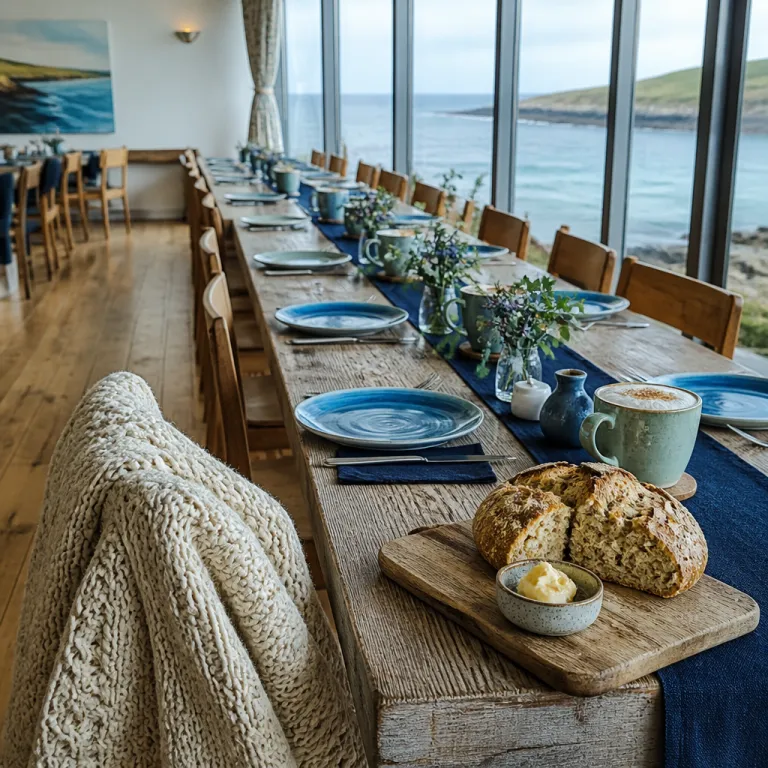
Gaeltacht hotels in Ireland for a breakfast spoken in Irish
Gaeltacht hotels in Ireland offer something quietly radical at breakfast. You sit down to good coffee and grilled tomatoes while the first words from the staff are in the Irish language, and the whole room subtly shifts into a different rhythm. For a traveler based in Ireland, this kind of stay turns a short break into a lived encounter with Irish culture rather than a themed backdrop.
Across the main Gaeltacht areas, from the Donegal Gaeltacht to Connemara and Corca Dhuibhne, the best properties treat Irish as the language of the house, not a performance wheeled out for tourists. Menus, room directories and in room information are bilingual, so you can follow along even if your own language skills are rusty or non existent, and the staff will glide between Irish and English depending on who is at the table. This is where gaeltacht hotels Ireland really stand apart from other countryside escapes, because the language is woven into the daily routine rather than added as a garnish.
In Annagry in the heart Donegal region, Caisleáin Óir Hotel sits beside the tidal strand with views that stretch towards the islands and the wild Atlantic horizon. This family run hotel is a textbook example of how a Gaeltacht hotel in Ireland can feel both polished and deeply local, with staff who know every back road to Gaoth Dobhair and every music session within 20 kilometres. When you book through a curated website such as my-ireland-stay.com, you are not just choosing a hotel, you are choosing how much Irish language and culture you want folded into your stay.
Donegal’s Gaeltacht coast: where language shapes the stay
Donegal is where gaeltacht hotels Ireland feel most elemental, because the landscape and the language seem carved from the same Atlantic weather. Drive west from Letterkenny and the road begins to twist towards the Donegal Gaeltacht, past signs for Gaoth Dobhair, Anagaire and Gleann Cholm Cille, and you start to hear Irish in petrol stations and village shops before you even reach your hotel. By the time you check in, the sound of the language already feels like part of the coastline, as natural as the sandy beaches and the low stone walls.
In Annagry, Caisleáin Óir Hotel and its sister property Óstán Caisleáin Óir anchor a small but lively village that looks straight out to the islands. Breakfast here is unhurried, with good food built around local ingredients, and staff who will happily switch to Irish if you try a few words yourself, or stay in English if you prefer to listen. A short drive away, An Chúirt Hotel in Gweedore, often referred to as An Chúirt Hotel Gaoth Dobhair, offers a more resort like stay, yet still keeps the Irish language at the centre of its welcome and its signage.
These hotels sit within easy reach of long sandy beaches, cliff walks and the wild Atlantic in full mood swing, so your stay becomes a loop between sea, road and breakfast table conversations. One morning might mean a language rich chat with staff about the best route to Gleann Cholm Cille, while the next could involve planning a visit to Oideas Gael for a taster of their language courses. If you are weighing up a Donegal escape against other counties, it is worth reading a more general guide such as this piece on choosing a refined hotel in County Mayo for a countryside escape, then deciding how central the Irish language should be to your own trip.
Breakfast as immersion: how Irish appears on the plate and the page
What actually happens when you sit down to breakfast in gaeltacht hotels Ireland, and the first greeting comes as Gaeilge rather than in English. In most of the best properties, the choreography is gentle, with staff opening in Irish, then repeating in English if your face looks panicked or your reply comes in hesitant schoolroom phrases. This is not a test, it is a hospitality ritual that treats the Irish language as a living part of the morning, as natural as the pot of tea on the table.
Menus in places like Caisleáin Óir Hotel, An Chúirt Hotel and other Donegal Gaeltacht properties are usually bilingual, so you might see “uibheacha scrofa” beside “scrambled eggs” and “arán donn” beside “brown bread”. The food itself is straightforward and good, often with local sausages, fresh fish when available and soda bread that tastes of real butter and a short supply chain, and the staff will happily explain any unfamiliar words or dishes. Around Gaoth Dobhair and the wider heart Donegal region, you will also notice Irish on corridor signage, lift buttons and even spa menus, which quietly reinforces the sense that you are staying in a place where the language is used for everything from safety notices to special offers.
For Irish based travelers used to city hotels where breakfast is a rushed buffet, the slower pace in Gaeltacht areas can feel like a luxury in itself. You might linger over a second coffee while listening to a neighbouring table chat in Irish about the weather on the wild Atlantic coast or the best sandy beaches for a walk before check out. If you are planning a broader circuit of five star stays and want to balance language rich properties with more classic luxury, it is worth reading a wider guide such as this overview of why Ireland’s cool summer has become a luxury selling point, then slotting your Gaeltacht nights into the itinerary where they will have the most impact.
Music, language courses and the wider Gaeltacht hotel experience
Breakfast may be where you first feel the Irish language in your stay, but gaeltacht hotels Ireland usually extend that immersion into the rest of the day. In Donegal, hotels around Gaoth Dobhair and Gleann Cholm Cille often act as informal hubs for traditional music, with live music in the bar on certain nights and the occasional late night music session when local players drop in. Step outside after one of these evenings and you will hear Irish drifting into the car park, mixed with the sound of the wild Atlantic somewhere beyond the dark fields.
For travelers who want to go deeper, the proximity of language schools such as Oideas Gael in Gleann Cholm Cille is a major advantage, because you can combine a comfortable hotel stay with structured language courses. Spend the morning in class learning how to order breakfast or ask about the weather, then test those phrases with patient staff back at your hotel, who are usually delighted to encourage even the most basic attempts. In this way, the hotel becomes part of a wider ecosystem of Irish culture, where the language, the music and the landscape reinforce each other rather than existing in separate tourist boxes.
Other Gaeltacht areas offer similar patterns, from the Aran Islands off Galway, where small hotels and guesthouses weave Irish into daily life, to the Kerry Gaeltacht around Corca Dhuibhne, where traditional music and Irish language signage are part of the streetscape. Even in places where the properties are more modest than the big resort style Chúirt Hotel in Donegal, the same principles apply, with staff using Irish naturally among themselves and switching to English only when needed. For a solo explorer based in Ireland, this mix of comfort, culture and low key language immersion can feel more rewarding than a generic luxury stay, because every interaction adds another layer to your understanding of the country.
Practical booking tips for Gaeltacht stays from Ireland
Booking gaeltacht hotels Ireland from within the country is straightforward, but a little planning will make the experience richer. Start by choosing which Gaeltacht areas fit your travel style, whether that is the rugged Donegal Gaeltacht, the island focused calm of the Aran Islands or the more compact coastal villages of Kerry and Waterford. Then look for a hotel whose website makes a point of mentioning the Irish language, because that usually signals a genuine commitment rather than a token phrase on a brochure.
In Donegal, Caisleáin Óir Hotel in Annagry and An Chúirt Hotel near Gaoth Dobhair both publish bilingual information online, and their booking pages often highlight special offers outside peak season. When you reserve, it is worth adding a note that you are interested in hearing and using Irish during your stay, as staff can then suggest the best nights for live music or point you towards local events. Remember that Gaeltacht areas follow a seasonal rhythm, with summer bringing more visitors and more music sessions, while shoulder seasons offer quieter stays where you might have longer conversations with staff about the language and the region.
For those building a longer itinerary around Ireland, a curated platform such as my-ireland-stay.com can help you balance Gaeltacht nights with other high end stays, because it reviews properties with an eye for both comfort and cultural depth. Their guide to five star hotels in Ireland and how to choose them is particularly useful if you want to mix language rich countryside escapes with more classic city luxury. However you structure it, the key is to treat the Irish language not as an optional extra, but as one of the main reasons to choose these hotels over more anonymous alternatives.
Why Gaeltacht hotels matter for Ireland’s language and tourism
Staying in gaeltacht hotels Ireland is not just a personal indulgence, it is also a quiet act of support for the Irish language. Tourism bodies estimate that around 1.2 million tourists visit Gaeltacht areas annually, and a significant share of that spend flows through hotels, guesthouses and B&Bs where Irish is part of the daily soundtrack. When you choose a hotel that pays its staff to use Irish at reception, in the restaurant and behind the scenes, you are helping to keep the language economically viable as well as culturally vibrant.
In counties such as Donegal, where roughly 30 percent of residents speak Irish according to Central Statistics Office Ireland data, the presence of hotels like Caisleáin Óir Hotel and An Chúirt Hotel creates local jobs that do not require people to leave the Gaeltacht to work. These properties often partner with organisations such as Oideas Gael or local music schools, hosting events that bring visitors into the heart Donegal communities rather than funnelling them straight along the wild Atlantic driving routes. The result is a tourism model where Irish culture, from language courses to traditional music, is not a staged show but a by product of everyday life.
For Irish based travelers, this has a practical implication when choosing where to stay. Opting for a Gaeltacht hotel in Ireland, whether in the Donegal Gaeltacht, the Aran Islands or smaller pockets like Ring in Waterford, means your money supports both high quality hospitality and the long term health of the Irish language. Over time, as more travelers signal that they value hearing Irish at breakfast and seeing it on menus and websites, the market will reward those hotels that treat the language as a living asset rather than a marketing slogan.
FAQ
Do staff speak fluent Irish in Gaeltacht hotels ?
In most Gaeltacht hotels, staff are fluent in Irish and use it naturally among themselves and with guests who are comfortable in the language. Properties that take their cultural role seriously ensure that front of house teams can handle check in, breakfast service and local recommendations in both Irish and English. As one verified information set puts it clearly, “Do staff speak fluent Irish? Yes, staff are fluent in Irish.”
Is prior knowledge of Irish required to stay in these hotels ?
No prior knowledge of Irish is required to enjoy a stay in Gaeltacht hotels, because all guests are welcome regardless of language ability. Staff will usually open in Irish, then switch seamlessly to English if you reply in English or look unsure. You can treat the experience as passive immersion, or you can try out a few phrases and let the team gently support your efforts.
Are menus and signage available in English as well as Irish ?
Most Gaeltacht hotels in Ireland use bilingual menus and signage, so you will see Irish and English side by side. Breakfast menus, safety information and in room guides are typically written in both languages, which makes it easy to follow even if you are only starting to recognise basic Irish words. This approach keeps the language visible without turning it into a barrier for guests.
When is the best time to visit Gaeltacht areas for cultural immersion ?
Summer brings the fullest cultural immersion in Gaeltacht areas, with more traditional music sessions, language courses and community events. However, shoulder seasons such as late spring and early autumn offer quieter hotels and longer conversations with staff, which can be ideal if you value depth over buzz. Winter stays can feel contemplative, with wild Atlantic weather outside and a strong sense of local life continuing at its own pace.
How can I engage respectfully with the Irish language during my stay ?
A simple way to engage is to learn a few basic phrases before you arrive, then use them with staff at breakfast or check in. You can also ask for recommendations on local events, language courses or music nights, which shows that you value the culture that shapes the hotel. Above all, listen, be curious and let the rhythm of the language guide how you move through the place.