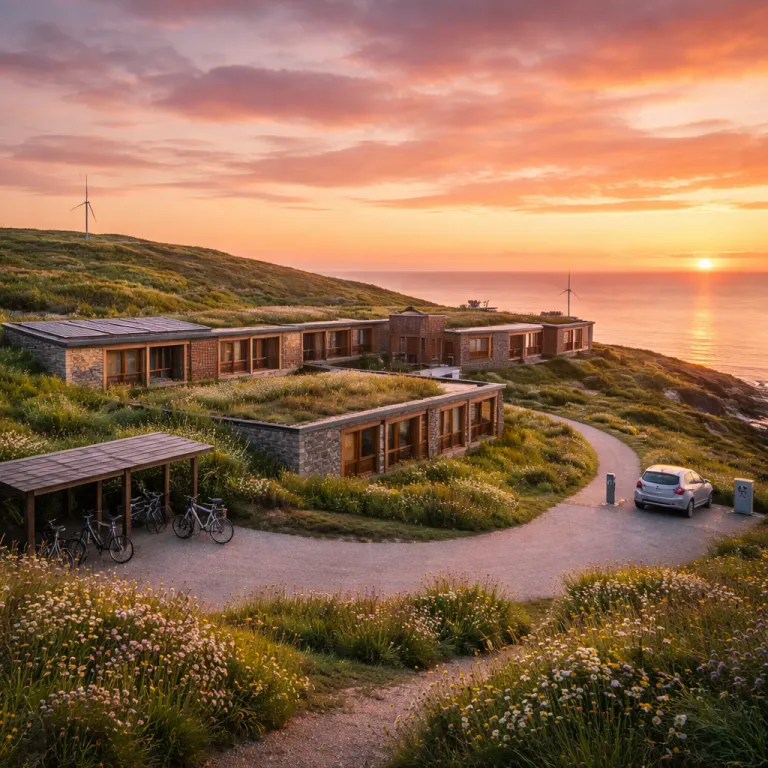
How to read “sustainable hotels Ireland eco-friendly” claims with a critical eye
Search for sustainable hotels in Ireland that promise an eco friendly stay, and you will meet a wall of green leaves, soft-focus sheep and vague pledges. Many hotels on the island now talk about being sustainable, yet only a fraction have changed how they use water, energy and materials in a measurable way. If you care about your carbon footprint when you travel for work or a weekend retreat, you need a sharper filter than a recycling symbol on the booking page.
Start with certification, because verified labels separate marketing from measurable carbon emissions. In Ireland, the Green Hospitality Programme and the EU Ecolabel both require audited reductions in energy, waste and water use, not just a note about reusing towels or removing single plastics from bathrooms. When a hotel claims to be carbon neutral, ask whether that status comes from deep structural changes on site or mainly from offsetting schemes; credible certifiers usually publish criteria and audit summaries that you can check directly on their official programme pages.
Look for specific, local details rather than generic eco language that could apply to any resort or city hotel. A genuinely sustainable hotel will publish data on its carbon, water and waste performance, explain how it sources food from nearby farm partners and name the independent body that verified its sustainable stays. If the sustainability page talks more about “feeling good” than about kilowatt hours, litres and tonnes, you are probably reading a brochure, not an environmentally conscious plan.
The certification landscape: what carbon neutral really means in Ireland
Across Ireland, three names recur when you look for sustainable hotels with serious credentials: Hotel Doolin in County Clare, Falls Hotel & Spa in the same county and BrookLodge & Macreddin Village in County Wicklow. Each hotel has reported achieving certified carbon neutral status, meaning they have measured their carbon emissions, reduced them through on site changes and then offset the remainder. Hotel Doolin and Falls Hotel & Spa publish their carbon neutral verification and annual sustainability reports on their own websites, while BrookLodge & Macreddin Village details its environmental policy and organic ethos in publicly available documentation; always check the latest report date so you know which year the figures refer to.
Certification programmes differ in depth, so a traveller based in any county should understand the tiers before booking a stay. The Green Hospitality Programme, widely used by environmentally conscious hotels across the island, audits energy, water and waste data annually and pushes properties to reduce carbon year on year, while the EU Ecolabel layers in strict criteria on cleaning products, single plastic reduction and air conditioning efficiency. When a hotel county marketing page lists several logos, focus on those two first, then look for extra proof such as participation in Sustainable Energy Authority of Ireland projects or membership of Ireland’s Sustainable Tourism Network, both of which usually provide project descriptions and dates you can cross-check.
For business leisure travellers who value both service and sustainability, this certification detail matters more than a glossy eco friendly badge. A carbon neutral country house that has invested in hydroelectric power or solar panels will usually have higher upfront costs, which can nudge room rates above less ambitious hotels, yet the long term benefit is a lower carbon footprint per guest night. When you weigh two similar hotels for a two night dinner, bed and breakfast break, use the more rigorous certification as a tiebreaker and consider offers such as curated hotel dinner, bed and breakfast deals across Ireland that highlight properties with proven sustainable stays.
Structural change versus soft green gestures: how to tell the difference
Not all eco gestures carry the same weight, and Irish travellers are increasingly alert to the gap between soft measures and structural change. A hotel that removes single plastics from bathrooms, adds a few native plants to the landscaping and calls itself eco friendly may still run on fossil fuel boilers and waste huge volumes of hot water. By contrast, a resort that has overhauled its heating system, installed efficient air conditioning where needed and redesigned its waste streams is tackling the real carbon problem.
Look at Hotel Doolin, often cited as Ireland’s first certified carbon neutral hotel, where investment in renewable energy, local food sourcing and community projects sits behind the marketing language. Falls Hotel & Spa in Ennistymon uses an on site hydroelectric turbine that, according to the hotel’s own sustainability reporting and Tourism Ireland case studies published in the late 2010s, has generated more than 5,000,000 kWh of clean electricity since installation, sharply cutting carbon emissions from the property and showing how a rural hotel county Clare can lead on sustainable tourism. BrookLodge & Macreddin Village in Wicklow has built an entire valley retreat around organic farm partnerships, natural materials and low impact design, with its environmental charter and supplier lists available in recent policy documents, proving that a country house style property can be both luxurious and environmentally conscious.
In cities, newer builds such as The Hawthorn at Galway Bay have integrated sustainability into the design from the ground up, with high performance insulation, efficient water systems and fully equipped rooms that minimise energy use without compromising comfort. When you compare friendly hotels in Dublin, pay attention to whether the building has been retrofitted with modern systems or simply added recycling bins beside the lifts and a note about towels. For urban breaks, pair your search for Dublin hotels with outdoor dining terraces with a check on their Green Hospitality or EU Ecolabel status, and look for references to recent audits or certification renewal dates so your terrace glass of wine does not come with an invisible spike in carbon.
County by county: where sustainable hotels in Ireland are raising the bar
When you plan sustainable hotels Ireland eco-friendly breaks, think in terms of county clusters rather than isolated properties. County Clare now offers a compelling pairing in Hotel Doolin and Falls Hotel & Spa, both carbon neutral and both rooted in the local community, with staff who can point you towards low impact activities along the coast. Their commitment to sustainable tourism extends beyond the hotel walls, from support for nearby farm suppliers to guided walks that highlight the natural beauty of the Burren’s flora and fauna.
In County Kerry, Killarney remains the classic retreat for Irish travellers who want lakes, mountains and a polished hotel stay without leaving the island. Around Killarney, you will find properties that talk about being eco friendly because they border the national park, yet only a handful have audited their carbon footprint or taken serious steps to reduce carbon through energy upgrades. When you see a sustainability page that leans heavily on the scenery of Killarney Park but says little about boilers, water systems or waste management, treat it as a scenic backdrop, not proof of environmentally conscious practice.
Elsewhere, County Galway and County Wicklow are emerging as strongholds for sustainable stays that balance luxury with responsibility, from coastal retreats overlooking Galway Bay to forest edged country house hotels in the Wicklow hills. These properties often use natural materials in their interiors, offer private access to walking trails and design their menus around local farm produce, which cuts transport emissions and supports the regional economy. For a longer planning horizon, keep an eye on new openings and relaunches highlighted in independent guides to hotel openings and relaunches worth booking in Ireland, where structural sustainability is increasingly a selling point rather than an afterthought.
Inside the room: what an eco friendly luxury stay should actually feel like
A genuinely sustainable hotel stay in Ireland should feel quietly efficient rather than hair-shirt worthy. In a well designed room, you will notice natural materials such as wool, linen and timber, smart controls for lighting and air conditioning, and perhaps a carafe of filtered water instead of rows of single plastic bottles. The aim is to reduce carbon and waste without stripping away the sense of private comfort that defines a premium hotel experience.
Pay attention to how fully equipped your room is for a low impact stay, from refillable bathroom amenities to clear information on recycling and linen changes that respects both staff and guests. Friendly hotels that take sustainability seriously will often provide guidance on local low carbon transport options, such as bicycles, walking routes or electric vehicle charging, turning the entire stay into a more eco friendly journey. When a property talks about sustainable stays, ask whether they track the carbon footprint per guest night and whether they have a plan to cut those carbon emissions further over the next few years.
Food and drink are another clear signal, especially for business leisure travellers who value a good breakfast as much as a fast check in. Look for menus that name local farm suppliers, highlight seasonal produce and avoid unnecessary imported items that inflate the environmental cost of your retreat. If the bar offers Irish spirits and wines from European neighbours rather than long haul bottles, and if the hotel county team can give insider tips on nearby restaurants that share the same environmentally conscious ethos, you are likely in a place where sustainability runs deeper than a marketing line.
What to ask before you book: insider tips for Irish travellers
Before you confirm a booking at any hotel in Ireland that markets itself as eco friendly, send a short email with three or four pointed questions. Ask which certification the hotel holds, when it was last audited and whether the certificate covers the whole property or only specific facilities such as the spa or conference centre. Request a simple breakdown of how they manage water, energy and waste, and whether they have targets to reduce carbon emissions over the next five years.
For properties that claim to be carbon neutral, ask how much of that status comes from on site reductions versus offsetting, and whether they have phased out single plastics across all operations, including staff areas and events. Clarify whether the air conditioning systems are modern high efficiency units or older models, and whether windows have been upgraded to reduce heat loss, as these details directly affect both comfort and carbon footprint. If a hotel cannot answer these questions clearly, or replies with generic sustainability language, treat that as a sign that the environmentally conscious work is still at the surface level.
To make this easier, you can adapt a simple email template: “Hello, I am interested in booking a stay and would like to understand your sustainability practices. Could you please confirm which environmental certifications you currently hold and the year of your most recent audit, share any recent sustainability or carbon reports, and outline key measures you have taken to reduce energy, water use and waste? I would also appreciate details on how much of any carbon neutral claim comes from on site reductions versus offsets, and whether single use plastics have been phased out across guest and staff areas.” Finally, use your own stay as a quiet audit, noting where the hotel’s sustainable claims align with reality and where they fall short, and share constructive feedback with management.
Key figures on sustainable hotels and carbon neutral tourism in Ireland
- Hotel Doolin in County Clare has reported donating more than €100,000 to environmental and community charities in the 2010s and early 2020s, according to its published sustainability reports, showing how a single hotel can extend its sustainable stays beyond carbon metrics into local impact; always check the latest report for updated totals.
- Falls Hotel & Spa’s on site hydroelectric turbine has generated over 5,000,000 kWh of clean electricity since commissioning in the late 2000s, based on figures shared in Tourism Ireland case studies and the hotel’s own energy data, significantly cutting the resort’s carbon emissions compared with similar hotels that rely solely on grid power.
- Across Ireland, participation in eco certification schemes such as the Green Hospitality Programme has risen steadily since the mid-2010s, reflecting rising guest demand for sustainable hotels and environmentally conscious tourism experiences, as reported in Green Hospitality Ireland programme updates and annual summaries.
- Tourism Ireland’s sustainable tourism strategy for the 2020s emphasises protecting natural beauty, water quality and cultural heritage, aligning national marketing with the on the ground efforts of carbon neutral hotels and country house retreats, as outlined in current Tourism Ireland strategic documents.
- Industry surveys from Irish hospitality research bodies in recent years indicate that a growing share of Irish travellers are willing to pay a modest premium for friendly hotels that can prove real reductions in carbon footprint, especially when those properties provide clear insider tips on low impact local activities and publish verifiable performance data.
FAQ: sustainable hotels, carbon neutral stays and eco friendly travel in Ireland
What does carbon-neutral mean for hotels?
What does carbon-neutral mean for hotels? It means the hotel offsets all its carbon emissions. In practice, the best examples in Ireland first reduce carbon through energy efficiency, renewable power and waste reduction, then offset the remaining emissions through credible schemes that publish project details and timeframes. When you see a carbon neutral claim, ask how much of the footprint has been cut on site before offsets are used.
How can I verify a hotel’s green claims before booking?
How can I verify a hotel's green claims? Look for certifications from recognized programs. In Ireland, the Green Hospitality Programme and the EU Ecolabel are strong indicators that a hotel’s water, waste and energy performance has been independently audited, with criteria and assessment methods available on programme information pages. You can also request recent sustainability reports or ask specific questions about single plastics, air conditioning upgrades and local sourcing, and check whether the documents clearly state the year the data covers.
Why choose a carbon neutral hotel for a business leisure stay?
Why choose a carbon-neutral hotel? To support sustainable tourism and reduce your footprint. For an Irish executive extending a work trip into a leisure retreat, staying in a certified property means your comfort, from fully equipped rooms to attentive service, comes with a lower impact on the island’s natural beauty. It also signals to the market that travellers value environmentally conscious design and operations, encouraging more hotels to pursue robust certification and publish transparent performance data.
Do genuinely sustainable hotels in Ireland cost more?
Many sustainable hotels in Ireland have invested heavily in new heating systems, insulation, water technology and natural materials, which can raise capital costs and sometimes room rates. Over time, energy savings from measures such as hydroelectric turbines or solar panels can offset those costs, allowing some friendly hotels to price competitively with less efficient rivals. When you compare options within the same county, weigh any small price difference against the long term benefit of reduced carbon emissions and better stewardship of local flora and fauna, and check whether the hotel’s reports show those investments paying off in lower energy use per guest night.
What should I look for in the room to judge sustainability?
In the room, signs of genuine sustainability include refillable amenities, filtered tap water instead of single plastic bottles, efficient lighting and clear information on linen policies that respect both staff and resources. Natural materials, good insulation and smart controls for heating or air conditioning all help reduce carbon without sacrificing comfort. If these details align with the hotel’s wider commitments on waste, water and local sourcing, and if recent sustainability reports or certification audits confirm progress, you are likely enjoying one of the more sustainable stays on the island.